I made my lungs go slow when every cell of me screamed to gulp. Slow. In through the nose, the cloth pulling to my lips, a count, out. A thief's whole life is stealing time; I lay in my own grave and stole breaths off my own panic, one at a time, and it is the only theft I've ever been ashamed to be good at.
I could move — a hand's width, no more, in any direction. I could turn my head until my nose fouled the wood. I could lift a knee until it met the lid. I could spread my fingers and touch, left and right, the walls of the whole world, and the world was the width of my own shoulders and no wider. You do not know what your body is for until it is given nothing to do and nowhere to go. Mine had spent its life as a spare quick length made for walls and gaps and the tops of things, and now it was folded into a box the shape of a person, and every muscle in it woke up wanting to run and found the running had been taken away, all at once, forever.
There's no clock in the ground. Three days my candle would burn, my little flame, whether I lay to watch it or not, and when it guttered the wax would seal and the death would set and everything I had would fall to the house, and I would be, at last and in law, exactly what they'd written.
But: the dead keep their steel.
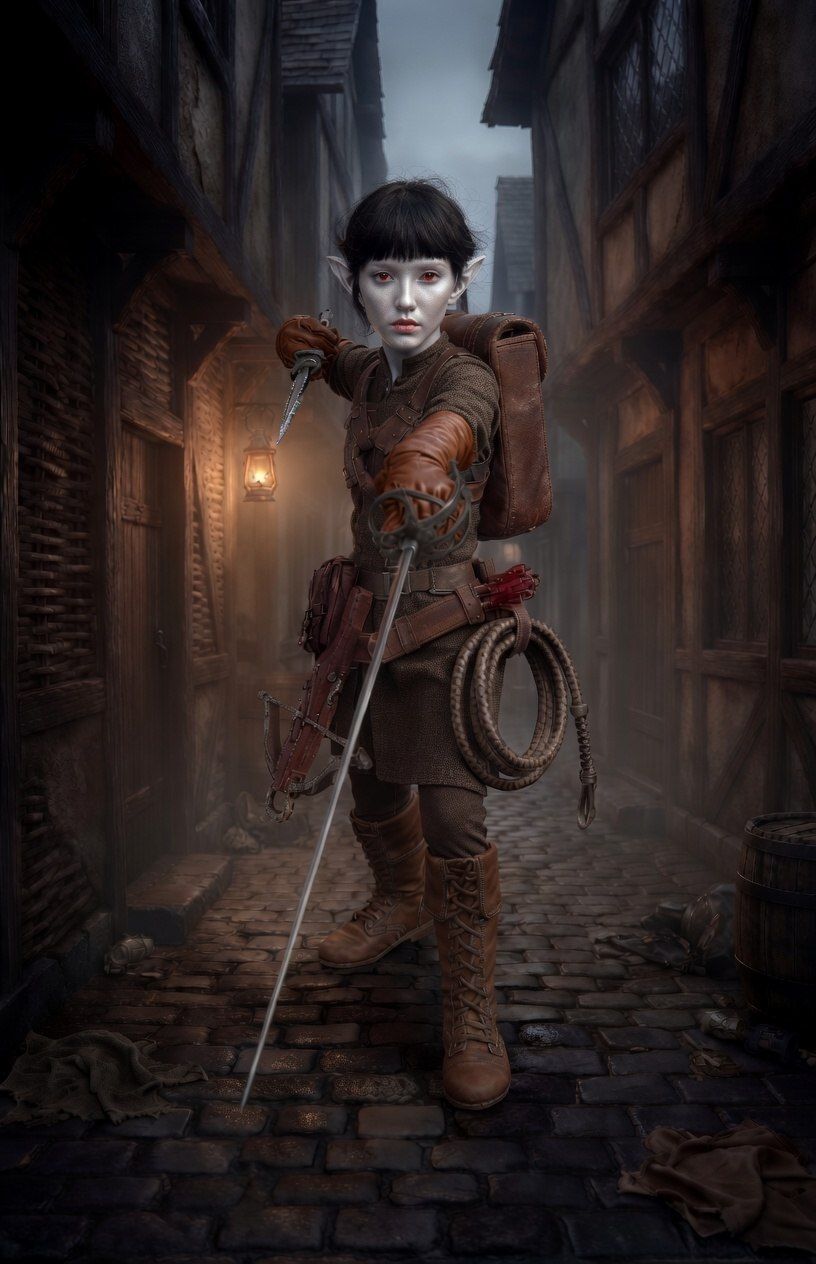
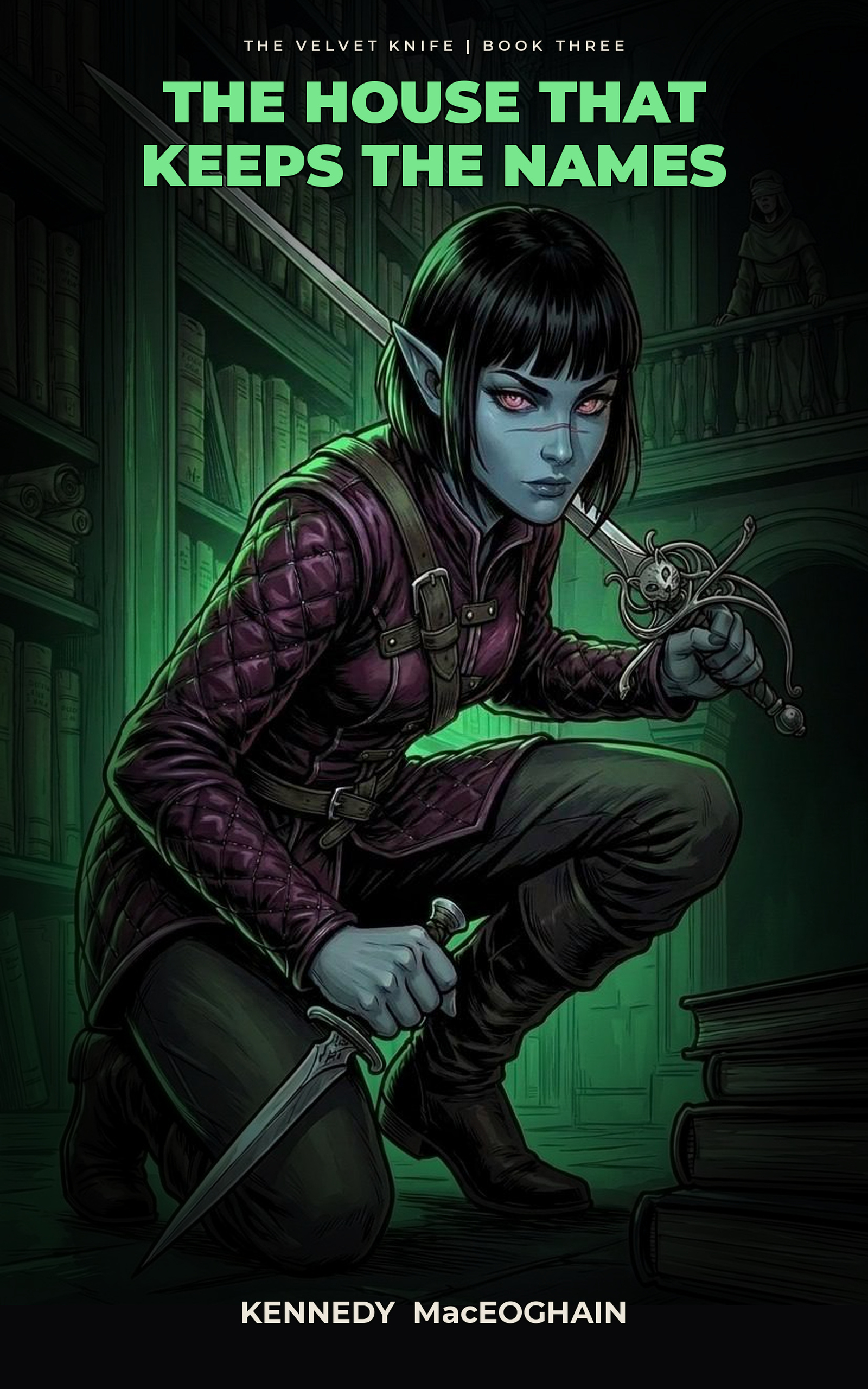
It is the one dignity that grim city gave its corpses. They hadn't known to look for it, or hadn't cared to, or the quiet man who dressed me for the hole had felt the hard length at the small of my back and left it because the dead keep their steel and it was more than his soul was worth to send a corpse down disarmed. And there, bound in old leather where it had ridden since I was young enough to steal it, was the Needle.
I set the point to the lid above my face and I began to work it into the seam. I'll not pretend it was quick, or that I was brave through it. I wept, in the box, the first real weeping I'd done in decades, snot and dark and the ants pouring and the air going bad, and I dug through it, because you can weep and dig at the same time — that's a thing the ground taught me, that despair and work aren't the enemies the churches say they are. You can be broken all the way through and your hands can keep moving, and the hands are what get you out. Not the courage. The hands.
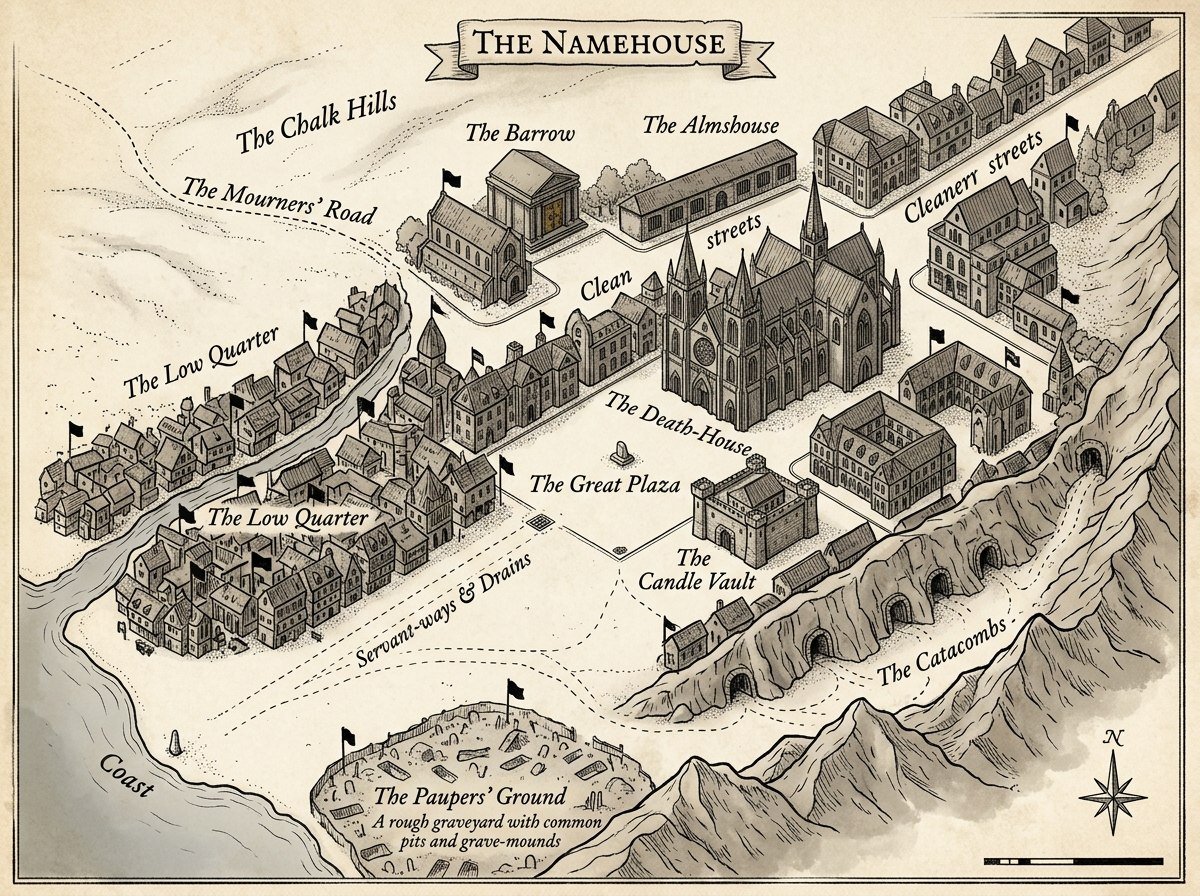
My hand broke the surface into nothing, into cold, into wet. I came up out of the earth of that city the way I've come into every city in my life — sideways, uninvited, hunting the nearest air. The rain came down and washed the dirt and blood off my body, and I got a whole breath, the first whole breath, and I laughed. Wet, and cracked, and mad, half in and half out of a hole in a paupers' field in the rain.
They thought me in the ground. And here was the joke the house had made without seeing it: my money wasn't theirs. Not yet.